
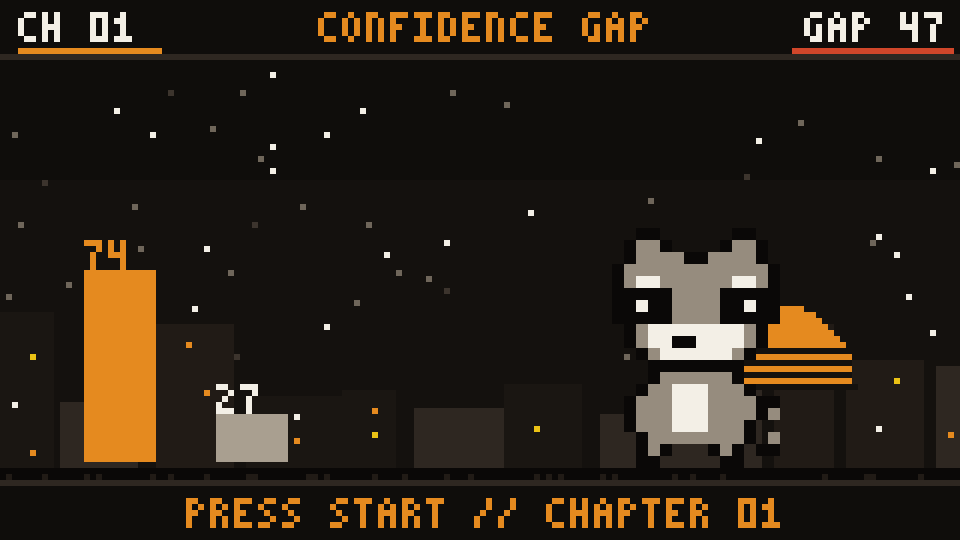
The 808 Books / Audit-Ready AI / Chapter 1
The confidence gap: why policies aren't proof
Why isn’t the policy proof?
The short version
- An auditor tests three things about any control: that it was designed sensibly, that it was put in place, and that it kept working over time. A policy only covers the first.
- Most AI governance programs stop there, which is why confidence runs so far ahead of maturity.
- The fix is to name, for every promise in your policy, the record that proves it happened.
By the numbers
74%say they could pass an AI compliance audit today; 27% call their program fully mature (CPA Practice Advisor)
64%have a staff acceptable use policy (a narrower thing than the 57% with a formal governance policy) that's actively communicated to staff; 44% have AI-specific incident response procedures (Schellman)
78%lack full confidence they could pass an independent AI governance audit (Insurance Business)
By the numbers
| Finding | Detail | Source |
|---|---|---|
| 74% say they could pass an AI compliance audit today; 27% call their program fully mature | 525 US professionals, July 2026. Vendor-funded (Schellman). | CPA Practice Advisor |
| 64% have a staff acceptable use policy (a narrower thing than the 57% with a formal governance policy) that's actively communicated to staff; 44% have AI-specific incident response procedures | Same survey. The gap between the two shows policies get written before the operating machinery does. | Schellman |
| 78% lack full confidence they could pass an independent AI governance audit | Grant Thornton 2026 AI Impact Survey, as reported by trade press | Insurance Business |
| 46% name governance or compliance barriers as a cause of AI underperforming, the top answer | Same survey | Journal of Accountancy |
| Among breached organizations that had AI governance policies, only 34% audited regularly for unsanctioned AI | IBM / Ponemon 2025. Vendor-funded. | Help Net Security |
The two surveys point the same way from different directions. When asked to believe, people are confident. When asked about the parts (policy, incident procedures, independent audit), the numbers fall.
01 Three kinds of evidence
Financial auditors have long split control testing into three questions. Once you hear them, you'll hear them in every audit for the rest of your career. They apply to AI without much translation.
- Design. Is the control sensible on paper? A policy that says "high-risk AI systems need a fairness test before launch" is a design.
- Implementation. Was it actually put in place? A fairness test report for the claims triage model, dated before go-live, is implementation evidence.
- Operating effectiveness. Did it keep working over a period? Quarterly fairness results for the same model, each reviewed and signed, across twelve months, is operating evidence.
SOC 2 reports make the same split: a Type I report looks at design at a point in time, a Type II report tests operation over a period. Ask anyone who has been through a Type II audit which one was harder. Then watch their shoulders go up.
Nadia's binder was pure design. Every sentence was a promise. Nothing in it showed a promise had been kept. The chair saw that in one page. Auditors usually take two.
02 Where false confidence comes from
Confidence usually rests on inputs: a budget line, an approved policy, a committee with a calendar, a vendor with a certificate. Those are real. They're also the things an auditor reads in the first hour.
The Schellman survey found almost everyone had funding and most had policies, yet barely a quarter described a mature program. Funding and policy are the visible parts. The invisible parts are the boring ones: a list that's kept current, approvals that leave a record, tests that get rerun, someone who reads the monitoring alerts.
My favourite habit, and I've used it on myself: when someone says "we're covered", ask "show me the last one". The last approval. The last test result. The last incident review. If the answer is a promise to find it, you've found the gap.
03 What a regulator or court actually reads
In Moffatt v. Air Canada (2024), a British Columbia tribunal held the airline responsible for wrong bereavement-fare advice its website chatbot gave a customer, and ordered it to pay C$812.02 in damages, interest and fees. The airline argued the chatbot was responsible for its own words. The tribunal didn't accept that.
The sum was small. The lesson for governance teams was large. No one asked whether Air Canada had a responsible AI policy. The questions were about what the system said, who owned it and whether the company had taken reasonable care that it was accurate. Those are questions about records, not principles.
04 Writing proof into the policy
You don't need a new policy. You need a second column next to the one you have.
Take every "must" and "will" in your policy and write next to it the artifact that proves it happened: a file name, a ticket type, a log, a signed form. If you can't name one, the promise is decoration. Either build the record or soften the promise to what you actually do. An honest small policy beats an ambitious one you can't evidence.
Nadia's team did this in an afternoon, in the small room with the bad radiator, with the policy printed and a red pen going round the table. Her 22-page policy held 61 "must" statements. They could name a record for 14 of them. Nobody said much when they finished the count. Somebody went for coffee and came back without any.
05 Setting the target
The aim of this book isn't perfection. It's a program where, for any AI system, you can produce in under a day: what it is, who owns it, what rules apply, who approved it, what was tested, what's been monitored since and what's gone wrong. Each chapter builds one part of that.
Exercise 1
Second column
- Goal
- Find out how much of your AI policy you can evidence today.
- Time
- 90 minutes.
- Open your AI policy (or the AI sections of your IT or data policy).
- Highlight every sentence that commits someone to do something: "must", "will", "shall", "is required".
- Copy each into the template below.
- For each, name the record that would prove it happened. Be specific: "approval ticket in ServiceNow, category AI-Review", not "approval".
- Try to find one real example of that record from the last six months.
- Mark each row green (found), amber (record type exists but you couldn't find an example) or red (no record type).
Done when Every commitment has a colour, and you've counted the reds.
Template
Policy-to-proof map
| Policy clause (quote it) | Kind of control (design / implementation / operating) | Record that proves it | Where the record lives | Example found? (date) | Status (green / amber / red) | Owner |
|---|---|---|---|---|---|---|
Chapter check
Three questions before you move on
Show all answers
1-B, 2-C, 3-A
Sources
- Schellman, 2026 State of AI Governance Report: CPA Practice Advisor; press release
- Grant Thornton, 2026 AI Impact Survey: Insurance Business; Journal of Accountancy
- IBM, Cost of a Data Breach Report 2025: Help Net Security
- Moffatt v. Air Canada, 2024 BCCRT 149: CanLII

End of chapter 1
Next · Chapter 2The AI inventory: finding everything, including shadow AIWhat AI do we run?